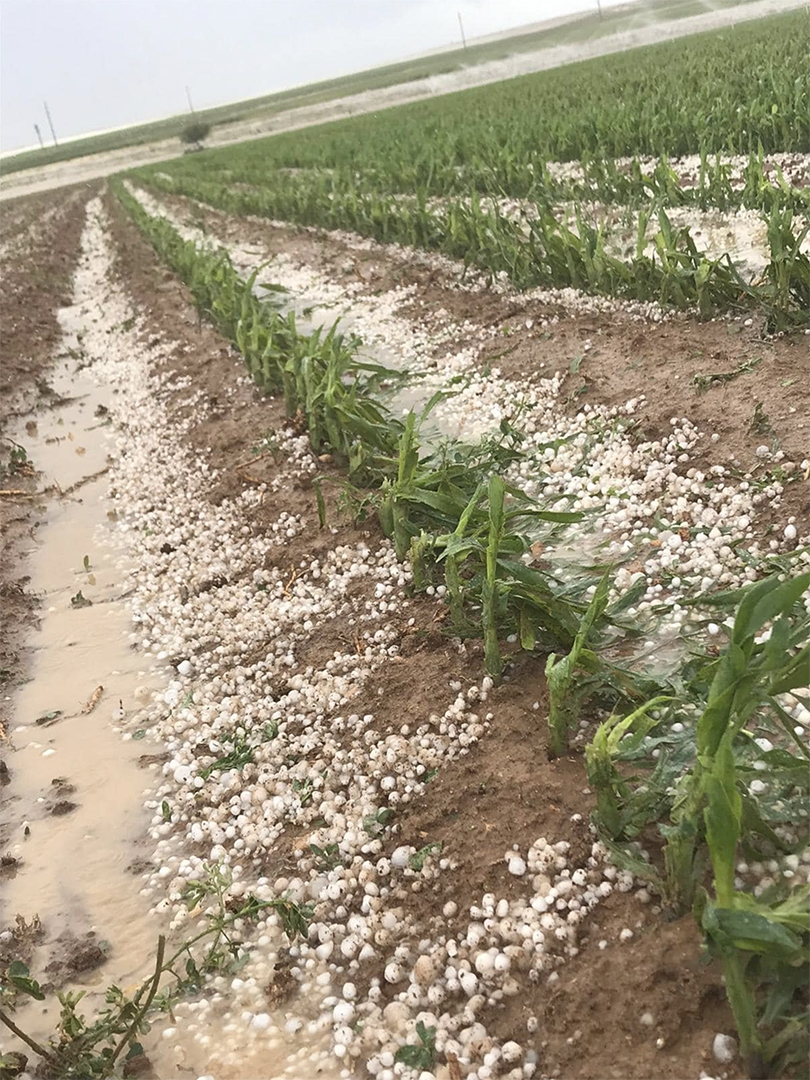
Hail is a form of precipitation that causes damage. It forms in a solid, icy state. Hailfall can be described as rain droplets losing their liquid properties and falling as ice. When large hailstones fall, they can cause serious damage to the environment. It is known to damage fields, greenhouses, orchards, vineyards, solar power plants, vehicles, the environment, and even people. The size of hailstones can vary between 5 mm and 15 cm, depending on conditions.
Hailstorms can occur in our country, most commonly in the spring months. This is because, during spring, interactions occur between warm and cold air fronts. As a result of this interaction, hailfall is formed.
How does hail form?
Hail forms beneath cumulonimbus clouds. Warm and dry air rising upward enters air currents at freezing temperatures, causing sudden cooling. By remaining within the cloud for a long time and absorbing moisture, hailstones are formed. In other words, due to air currents inside the clouds, liquid raindrops begin to rotate and rise.
When they encounter air temperatures between 0 and -40 degrees Celsius, they begin to freeze. Thus, hailstones are formed. Hailstones circulate within the clouds. The longer they remain inside and the greater the temperature difference in the air, the more layers build up on the hailstones, making them larger.
Over time, hailstones become heavier, lose their ability to stay aloft due to gravity, and begin to fall toward the ground. This is when hailfall occurs.
Some hailstones can form during storms. Such situations pose serious danger because the wind increases the effective weight and impact of hailstones, which can create significant hazards on the ground.
When does hail form?
Hailstorms are natural weather events that can occur in many regions around the world. They typically form during the spring season as a result of interactions between warm and cold air masses. This atmospheric interaction leads to the formation of hailfall.
What are the damages of hailstorms?
It damages agricultural lands, leading to lower-quality crop yields.
Hail that occurs during the flowering or fruiting periods in orchards can cause severe damage to crops, resulting in partial or complete crop loss.
It causes major damage to greenhouses covered with glass or plastic.
Because it damages farmland, soil productivity may decrease the following year, and diseases can occur in tree species.
Hail formation can cause trees in agricultural areas to dry out in the following year.
The fall of large hailstones can harm living beings as well as houses and trees.
Vehicles and homes may be damaged during hailstorms.